Yesterday I shared my favourite horrors of the year, today comes the best of festivals. All the films featured in the following list were viewed at one of the many film festivals I covered this year, but at the time of writing, have not yet been released in the UK.
10. She Loved Blossoms More

She Loved Blossoms More first screened at TriBeCa and won me over with its surreal nature. Everything from the story to visuals, is weird, quirky, and covered in goo. It is not a film that everyone will get on board with, but I really connected to its ethereal strangeness and the beautiful rendering of some grotesque imagery.
The plot, as loose as it is, joins a trio of brothers – Hedgehog (Panos Papadopoulos), Japan (Aris Balis), and Dummy (Julio Katsis) – as they try to advance science with the creation of a time machine in the hopes of resurrecting their deceased mother. She Loved Blossoms More begins many months into their attempts, the viewer dropped into the madness of their experimentations. And madness really is the keyword as their laboratory is a straight out of H. P Lovecraft’s nightmares. The appearance of their working area is cyberpunk meets steampunk, with analogue machinery reigning supreme over digital. The environment is dark and dank, and even before witnessing any of their research, a foreboding atmosphere permeates the screen.
She Loved Blossoms More exists to tantalise and disturb on every level, and its quirky visuals have haunted me ever since.
9. Tummy Monster

Ciaran Lyons’ Tummy Monster played at Glasgow Film Festival and told a claustrophobic tale of an encounter with a celebrity gone awry. In Tummy Monster, a downtrodden tattooist (Lorn Macdonald) has the worst night of his life after being summoned to his studio in the middle of the night by famous musician, Tummy (Orlando Norman). What begins as an encounter with a dream client, quickly descends into chaos after a simple request is refused.
Before seeking out Tummy Monster, be warned, there is a chant repeated so often that it will become inked into your brain. If you can handle that, Tummy Monster is an engaging, atmospheric, and tense film that is a 90% two-hander between Lorn Macdonald and Orlando Norman. Incredibly, Tummy Monster was shot in just five days, and proves director Ciaran Lyons to be one to watch. If he can make a film this compelling on a shoe-string budget in under a week, imagine what he could produce with double that…
8. The Surfer
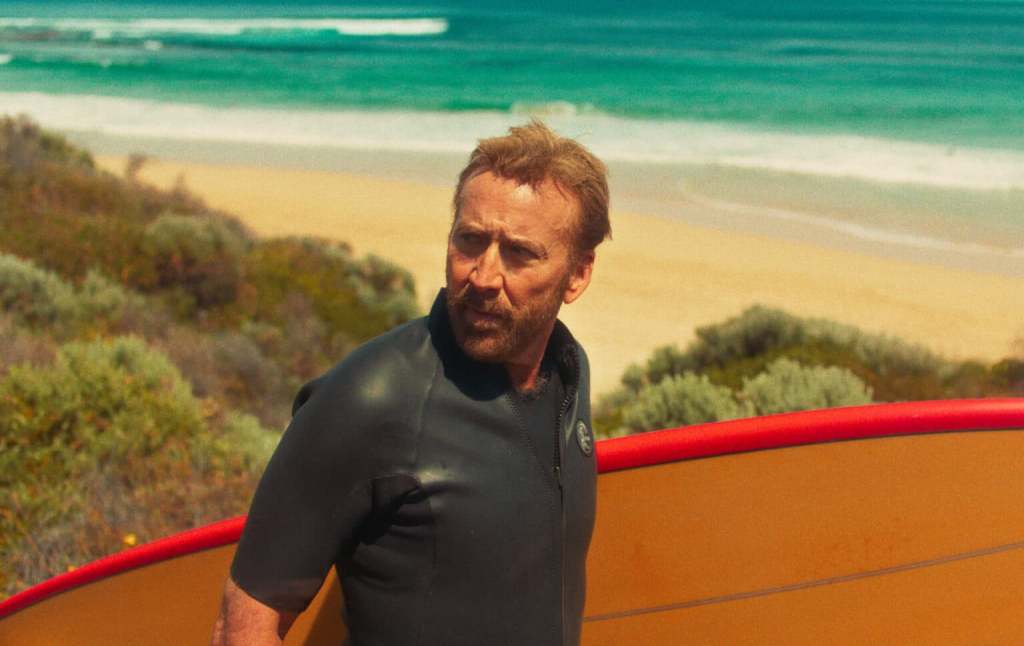
2024 has been another great year for Nicolas Cage with Longlegs taking the Internet by storm. In typical Nick Cage fashion though, the actor has not rested, and at the same time Longlegs was pumping out marketing left, right, and centre for Cage’s The Surfer was debuting at Cannes. I had to wait until the London Film Festival to finally get my eyes on it, but it was well worth the wait.
As The Surfer begins, Christmas is looming and Cage’s character, credited simply as ‘The Surfer’, wants only to take his son for a surf on the break from his childhood. However, the break in question is now the sole territory of ‘The Bay Boys’ and any non-local outsiders are strongly encouraged to retreat. After having his hand forced once, the man sticks around, determined to hold his ground. What follows is the slow unravelling of a desperate and determined mind.
Playing characters in states of mental decline and distress are Cage’s forte, and in The Surfer he gets to go full Cage. As the Surfer fixates on his rivalry with the Bay Boys, every other aspect of his world falls away from him. He loses himself entirely to the cause, and even when faced with the deplorable actions of the surfing unit, he does not waver. Some of his ordeal is gnarly; the cutting off of his water supply and a risky new drinking source featuring high on the gross-out list. Other acts involve stealing his belongings as well as effectively starving him and isolating him from society. The punishment dished out by the Bay Boys, headed up by a fantastic Julian McMahon, is awful, and yet, the audience continually questions why the Surfer doesn’t just leave.
Channelling Point Break by way of psychological torment a la Wake in Fright, with a smattering of Cage’s brand of humour, The Surfer is set to be another Cage cult classic.
7. Traumatika
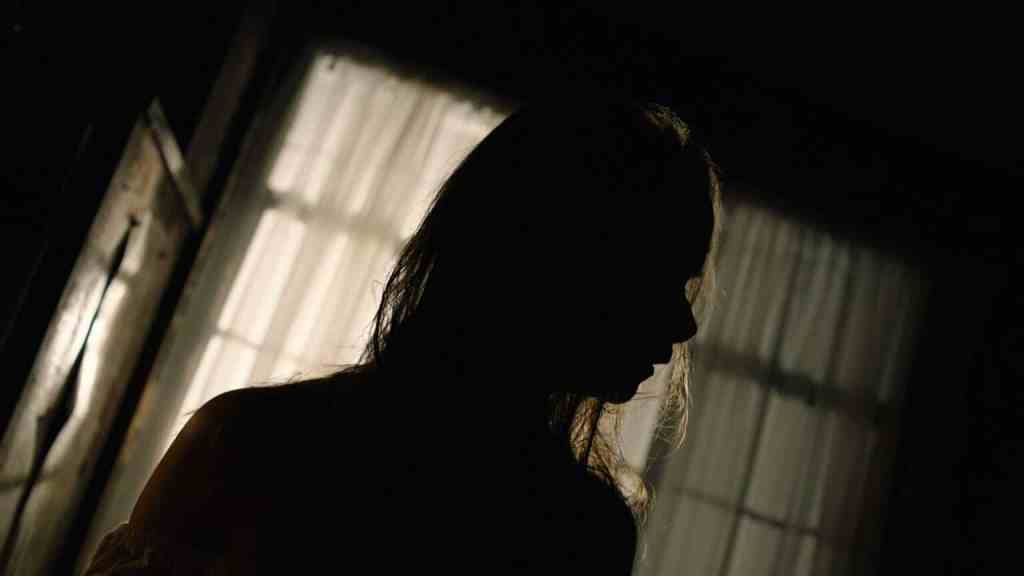
My liking of Traumatika caused some controversy amongst friends at this year’s FrightFest. For whatever reason, Traumatika struggled to connect with the FrightFest main screen viewers, and yet those that watched it outside of this environment viewed the film in a more positive light.
Directed by Pierre Tsigaridis, whose previous film Two Witches is a lot of fun, Traumatika offers a rollercoaster journey through several popular sub-genres of horror, from found-footage to slasher. The story traverses several years as it chronicles the impact of a cursed artefact on an ever growing amount of people. Of all Traumatika’s elements, it is the sound design that most stood out to me. Traumatika’s opening act climaxes with a frantic chase within a dark and dilapidated house. Whilst little can be seen, plenty can be heard, and the guttural noises emitted are monstrous in nature and seem to envelope the audience entirely. This section beautifully plays into the idea that Traumatika is one big ghost train ride for the viewer that will hopefully get a release in the near future.
6. The Last Podcast
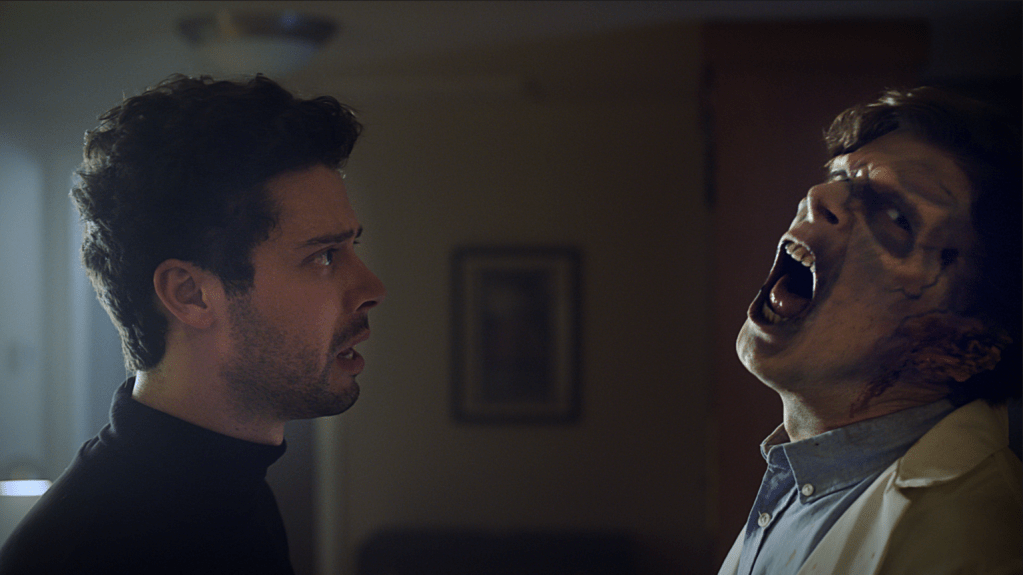
A film that fared better with the FrightFest crowd was Dean Alioto’s The Last Podcast. Alioto is best known to genre fans for his film The MacPherson Tapes, which is heralded as one of the originators of the found-footage subgenre. The Last Podcast steps away from found-footage to tell a wicked comedy-horror-drama about the desperate lengths one podcast host, Charlie (Eric Tabach), will go to in order to make his show a success.
Stories about the driven and ambitious coming unstuck are always fascinating to watch. The point of difference in The Last Podcast however, is that the viewer never disconnects from Charlie. Many films push their lead character into irredeemable territory, but in keeping Charlie close to the viewer, Alioto creates a more emotive story. The Last Podcast also keeps its tone slightly lighter than some of its counterparts. An easy comparison would be An American Werewolf in London. There is darkness within Alioto’s movie, but like John Landis’ film, it also has a twisted sense of humour. This decision presents a welcome respite from horrors that go heavy on the doom and gloom.
The Last Podcast expertly juggles the light and the dark, thus creating a story that reflects real-life. The podcaster angle, although nothing new, is handled in a different way. Rather than cheering for Charlie’s destruction, the viewer is willing him to get his act together and succeed. This investment in Charlie is paramount, and thanks to thoughtful performance from Tabach, the most important aspect of The Last Podcast works. This comedy horror thriller proves that Dean Alioto continues to be a filmmaker worth investing in, and with The Last Podcast’s fun mid credits section, this might not be the last we’ve seen of this world.
5. A Desert
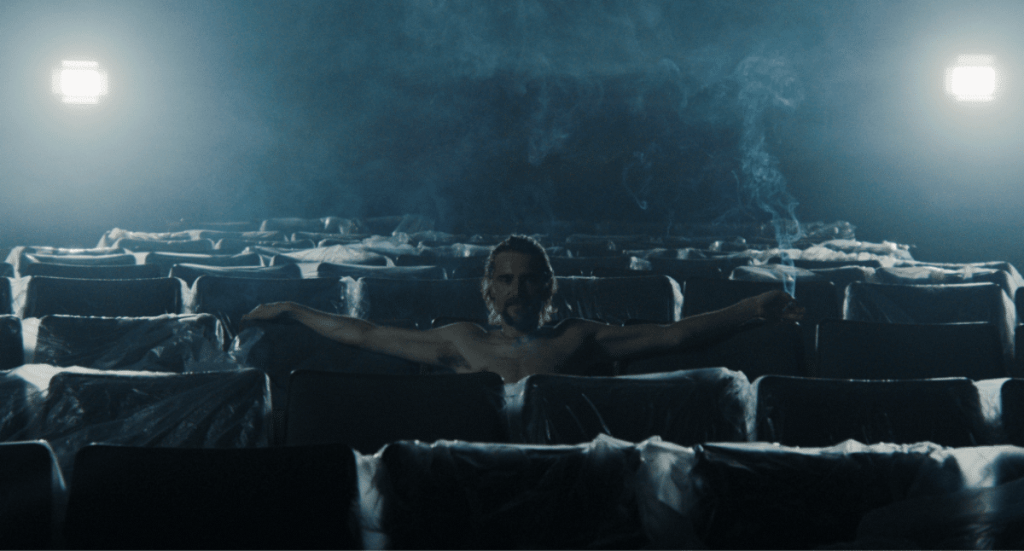
Another TriBeCa debut that I loved this year was Joshua Erkman’s A Desert. Erkman tells a tangled narrative web centred on one photographer’s road trip from Hell. To say much more about A Desert’s plot would spoil the viewing experience, but suffice to say, Erkamn and co-writer Bossi Baker have created a story that is deliciously devious. This is a film that is in a constant state of movement, its narrative fluidity being one of its key strengths.
The cinematography by Jay Keitel beautifully captures the vastness of the desert terrain, and the emptiness of the venues that Alex is photographing. Keitel manages to infuse the dusty heat of the location into each frame. There’s a sweatiness to the imagery that helps transport the audience fully inside of the film, leaving them yearning for a nice cool drink or blast of air conditioning. It’s a remarkable feat, but a vital point of connection given the story’s fractured construction. Accompanying the evocative cinematography is a lot of quiet. Erkman opts to allow the sounds of nature to encroach on the viewer, causing them to withdraw further into this sweaty nightmare. What score there is, is infrequent and jazzy, disorientating the audience, transporting them to an almost fugue-like state from which to experience this wicked and wild world.
As all the characters vie for attention, they are steered down the darkest and bloodiest of roads, creating a neo noir that screams filth and ferocity. Though Erkman has clearly been inspired by scuzzy road movies, the meanness of the desert, The Vanishing, and even Alfred Hitchcok, A Desert is unlike anything else, which makes it utterly irresistible. Hypnotic performances bleed onto sweaty and oppressive visuals, creating a potent atmosphere that will delight those with a thirst for the darkside.
4. Sebastian

Set in London, Sebastian follows writer Max (Ruaridh Mollica) as he researches his debut novel by becoming a male sex worker. At the same time as meeting clients, Max is riding the tricky seas as a freelance writer for a high-end magazine. Early doors, he is assigned an interview with his hero, Brett Easton Ellis, but as Max becomes more fascinated with his secret sex work life, he risks his position.
Interestingly, whereas the ‘safe’ world of writing is portrayed as cutthroat and underhand, the overly stigmatised environment of sex work is shown in a much softer light. Those looking for darkness in Max’s experiences will be left wanting as this is a positive portrayal of the industry. The seediness is removed and is replaced by a much more transactional attitude. The work is so devoid of emotion that Max has to embellish to spice up his stories for the novel. With the exception of one client, Max is merely providing a service. The exception, played by Jonathan Hyde, becomes Max’s undoing. As he develops feelings for the older man, his story takes on a new direction, but one that does not conform to what his publishers want to read.
Mikko Mäkelä’s Sebastian debuted at Sundance back in January and presented another fantastic queer story. Viewed shortly after All of Us Strangers and Femme, Sebastian doesn’t house the same emotional devastation or intense unease as either film, but is nonetheless another prime example of modern queerness. Too many queer stories are told through the guise of the past, making films such Sebastian, which are set in current times, vital.
3. Restless
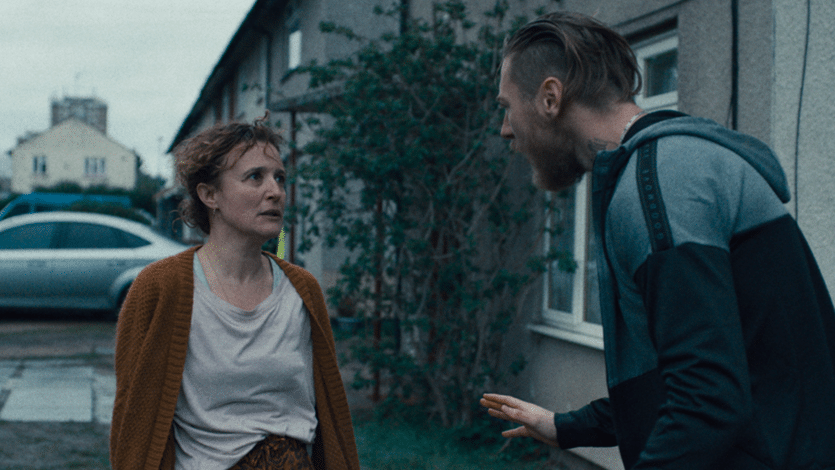
The line-up at TriBeCa this year was fantastic with Jed Hart’s Restless being the third film to screen at the festival that has made my list. Sadly, since its screening at TriBeCa, I’ve heard little about other screenings, festivals or otherwise, which is a massive shame as Restless is excellent. Its story of nightmare neighbours is a traumatic and frustrating watch as Hart expertly captures the horror of living next door to noisy and inconsiderate people. Of all the films I’ve seen this year, Restless certainly made me the most angry. I had to pause my screener at one point as I was fearful I might smash my television in an attempt to help care worker Nicky (Lyndsey Marshal) fight back against the despicable Deano (Aston McAuley).
For some audience members, Restless will be triggering. Hart deftly captures the futility of living next door to inconsiderate noise machines, right down to the lack of help from the police or council. Restless also highlights how the community of the neighbourhood has disintegrated. Once upon a time, everybody knew everybody and helped one another. Now, more often than not, those that live next door are strangers. Here, Nicky does know those who live around her, but the community spirit has evaporated and everyone nearby leaves Nicky to fight her fight alone. It’s a sad reality that will cause the blood pressure to rise for those that have lived through similar encounters.
Triggering, traumatic, and chest-tighteningly tense, Restless is an apt name for the film as it will leave the audience feeling exactly that.
2. The Rule of Jenny Pen

James Ashcroft’s Coming Home in the Dark is one of my favourite horror thrillers of recent years. As such, I have been patiently awaiting his follow-up, The Rule of Jenny Pen. Having been unable to secure a screener for the film out of Fantastic Fest, I was delighted when it was revealed as this year’s secret film at Celluloid Screams.
The Rule of Jenny Pen has a vastly different setting and story to Coming Home in the Dark, but is full of Ashcroft’s now signature air of foreboding dread, tension, and malice. Featuring two incredible performances from John Lithgow and Geoffrey Rush, The Rule of Jenny Pen places the pair as rivals inside an elderly care home. Rush plays a newly arrived Judge who is horrified to discover that Lithgow’s character rules with an iron fist alongside his beloved hand puppet Jenny Pen.
The elderly are too often forgotten on screen and, when they are seen, are trapped into playing loveable grandparents. In The Rule of Jenny Pen, Ashcroft shifts this perspective and allows the elderly to be human, right down to exhibiting their ability to be cruel. Some will struggle with the elder abuse content, but subject matter aside, The Rule of Jenny Pen is worth watching for the phenomenal performances of Rush and Lithgow alone.
1. The Dead Thing

The Dead Thing received its world premiere at this year’s Fantasia FIlm Festival. Upon reading the film’s synopsis, which teased a tale of online dating gone wrong, I was hooked. Within moments of settling in with Elric Kane’s The Dead Thing, I was in love. In fact, I adored this twisted relationship ghost story so much that I dragged myself out of bed early at FrightFest to witness The Dead Thing for a second time, this time on the big screen.
Set in Los Angeles, The Dead Thing plays out amongst bars, rental apartments, office spaces, and the backseat of Ubers. These settings are all devoid of nature and build a claustrophobic box of monotony around Alex (Blu Hunt). The use of these surroundings perfectly reflects the lifecycle of single city workers, highlighting how zombified life with a full time job can make people. This is further exemplified through Alex’s use of dating apps. Everything about her world is making her numb and so the introduction of Kyle (Ben Smith-Petersen) is a welcome jolt out of her repetitive routine.
With their first date, director Elric Kane perfectly captures those feelings of spending time with someone with whom you share an immediate connection. Both Hunt and Smith-Petersen do brilliant work at selling the instant twin flame energy. During this sequence, some Linklater vibe seeps in and leave the viewer wondering if they are accidentally watching a rom-com. However, this is merely Kane sucking the audience in, seducing them in a similar fashion to Alex falling under Kyle’s spell. What comes next is far from romantic and affirms The Dead Thing’s cold beating heart.
The union of Alex and Kyle is the perfect metaphor for toxic relationships and the damage that they cause. Typically, watching two people fall head over heels is portrayed as a beautiful process, but here, Kane highlights exactly how bad for us certain people can be. The further the relationship draws on, the more possessive Kyle becomes, paving the way for an intense final act. Genre films about relationships will forever be compelling. They say that the line between love and hate is thin, and this is expertly exemplified in Kane’s tragic and traumatic tale. A film for fans of Nina Forever and Bad Match, The Dead Thing is an elegant exploration of modern dating that isn’t afraid to highlight just how toxic these encounters can become.
Since its screenings at Fantasia and FrightFest, The Dead Thing has been scooped up by Shudder and will arrive just in time for Valentines Day 2025. I’m already counting down the days.
 Film Disclosure
You must be logged in to post a comment.